I'm interested in the man underneath the role.
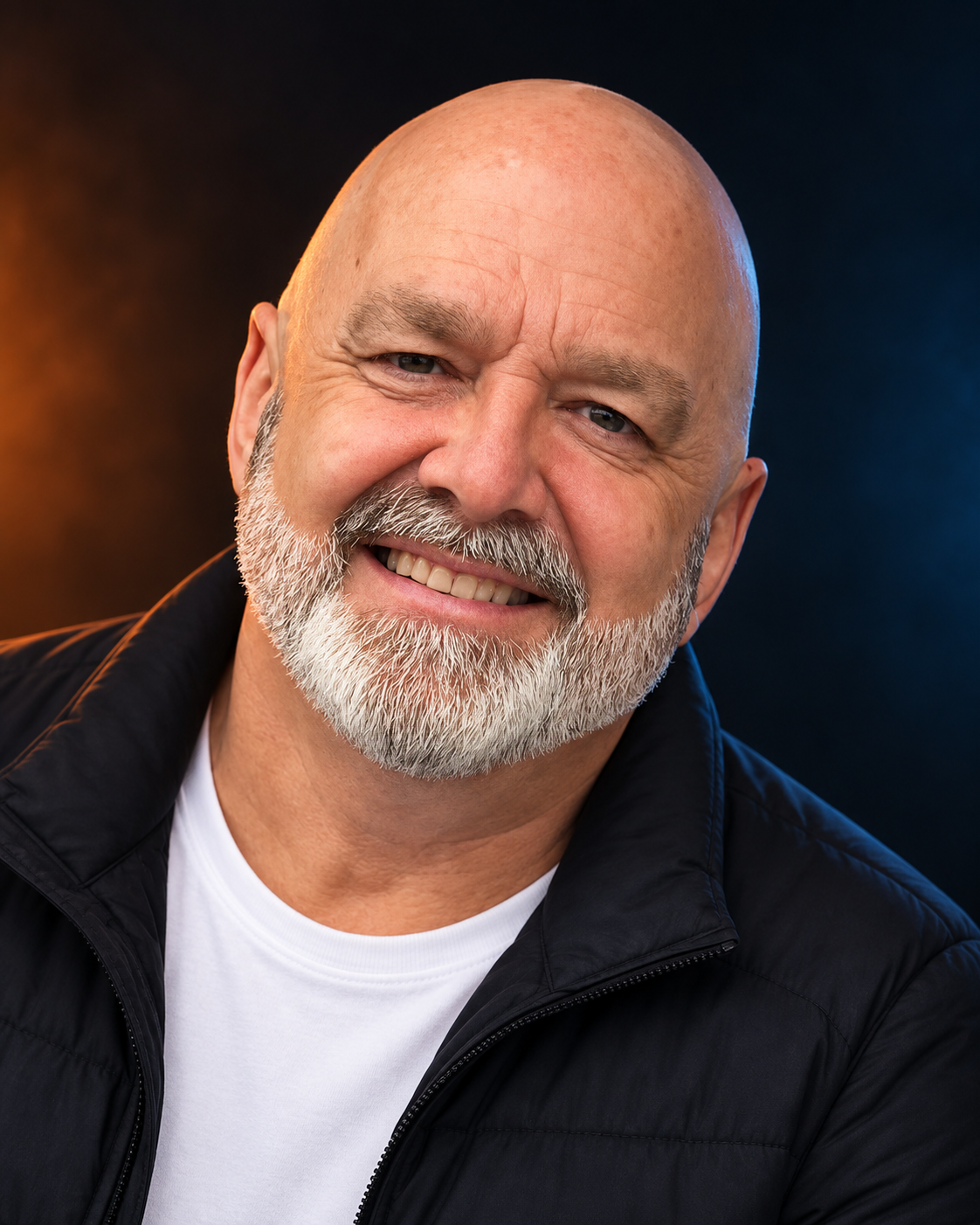
I'm Dan Grové, author, speaker and founder of The Modern Man Project.
This project began with a simple question: how much of the man we become is actually chosen, and how much is inherited, learned or built in response to what happened to us?
I'm not coming at this as someone who has life figured out.
I'm coming at it as a man who eventually started questioning things he had spent most of his life taking for granted.
For a long time, I was good at being capable.
Working. Solving. Leading. Providing. Carrying responsibility. Being the person other people could rely on.
There is nothing wrong with those qualities. I still value them.
But over time I began to understand that some of the things I considered strengths also had another side.
Independence could become isolation. Responsibility could become over-responsibility. Emotional control could become emotional distance. Being useful could quietly become part of how I measured my worth.
That realisation became the beginning of a much bigger conversation.
Some of our strongest identities begin before we know we're building them.
I was twelve when my father died.
Like many children faced with something far too large to understand, I made sense of it in the only way I knew how.
Be strong.
Don't make things harder.
Help.
Don't need too much yourself.
Nobody sat me down and gave me those instructions. They became conclusions I reached for myself.
And they worked.
They helped me become independent, capable and dependable. They helped me build a career, lead people and handle difficult situations.
But somewhere along the way, the strategy became identity.
It took many years to understand that the things we learn to survive with can follow us long after we actually need them.
“You can honour the boy who learned to survive without requiring the man to keep living by the same rules.”
Because men need more than another argument about masculinity.
We need better conversations about what it actually feels like to live as a man.
Not Anti-Masculinity
I don't believe masculinity is something men need to apologise for.
Strength, courage, independence, responsibility and resilience remain valuable qualities.
The question is whether those qualities are serving us or whether we have become trapped inside them.
Not Vulnerability for Its Own Sake
Vulnerability is not about telling everybody everything or making emotion into a performance.
It is about having enough internal security to tell the truth when the truth matters.
Not Blaming the Past
Understanding where a pattern came from is not the same as blaming your parents, relationships or childhood.
The past explains. It does not have to control.
Not One Version of Manhood
There is no single correct way to be a man.
The point is not conformity. It is consciousness.
More Honest Relationships
Self-awareness matters because the patterns we refuse to examine eventually show up in our relationships.
Partners, children, colleagues and friends often experience the things we think we are successfully hiding.
Choice
That is ultimately what this work is about.
Recognising what shaped us so that we have more freedom to decide what comes next.
You don't need to destroy the man you were to become the man you want to be.
Growth makes more sense when we approach ourselves with curiosity rather than contempt.
Most of our patterns existed for a reason.
Some kept us safe. Some helped us succeed. Some earned approval. Some helped us belong.
We can respect why they developed and still decide that they no longer belong in the life we are building.
Strength and vulnerability can coexist.
You don't have to choose between being capable and being emotionally honest.
Understanding is not excusing.
We can understand where behaviour came from while still taking responsibility for what we do next.
Men need other men.
Independence matters, but isolation is not the same thing as independence.
Relationships reveal us.
The people closest to us often show us the parts of ourselves we would rather not see.
You can choose differently.
An inherited pattern is not a life sentence.
The Modern Man Project takes several forms.
Different formats. The same underlying conversation.
Writing
Essays exploring masculinity, fathers, childhood, identity, relationships, vulnerability and the stories men live inside.
Read →Podcasts
Longer conversations about the emotional lives of men, the patterns we inherit and the questions we often struggle to say out loud.
Listen →Books
The Strong Enough series explores masculinity, vulnerability, identity, rebuilding, leadership and becoming.
Explore →Speaking
Talks for men's groups, workplaces, organisations, charities and events designed to create honest conversation rather than deliver another lecture.
Speaking →I'm not trying to become a guru.
I don't have a ten-step formula for becoming a man.
I don't think men need another person standing above them explaining what masculinity should look like.
I'm far more interested in standing alongside the conversation.
Some of what I write comes from my own experience. Some comes from conversations. Some comes from psychology, philosophy, relationships and simply paying attention to the way men live.
I will change my mind about things. I will learn. I will probably get things wrong.
That is not a weakness in the project.
It is part of the point.
Not: “What should a man be?”
A better question might be:
“What kind of man am I choosing to become?”
You don't have to have yourself figured out before you start paying attention.
Read something. Listen to a conversation. Question something you've always assumed was true.
Start wherever something catches your attention.